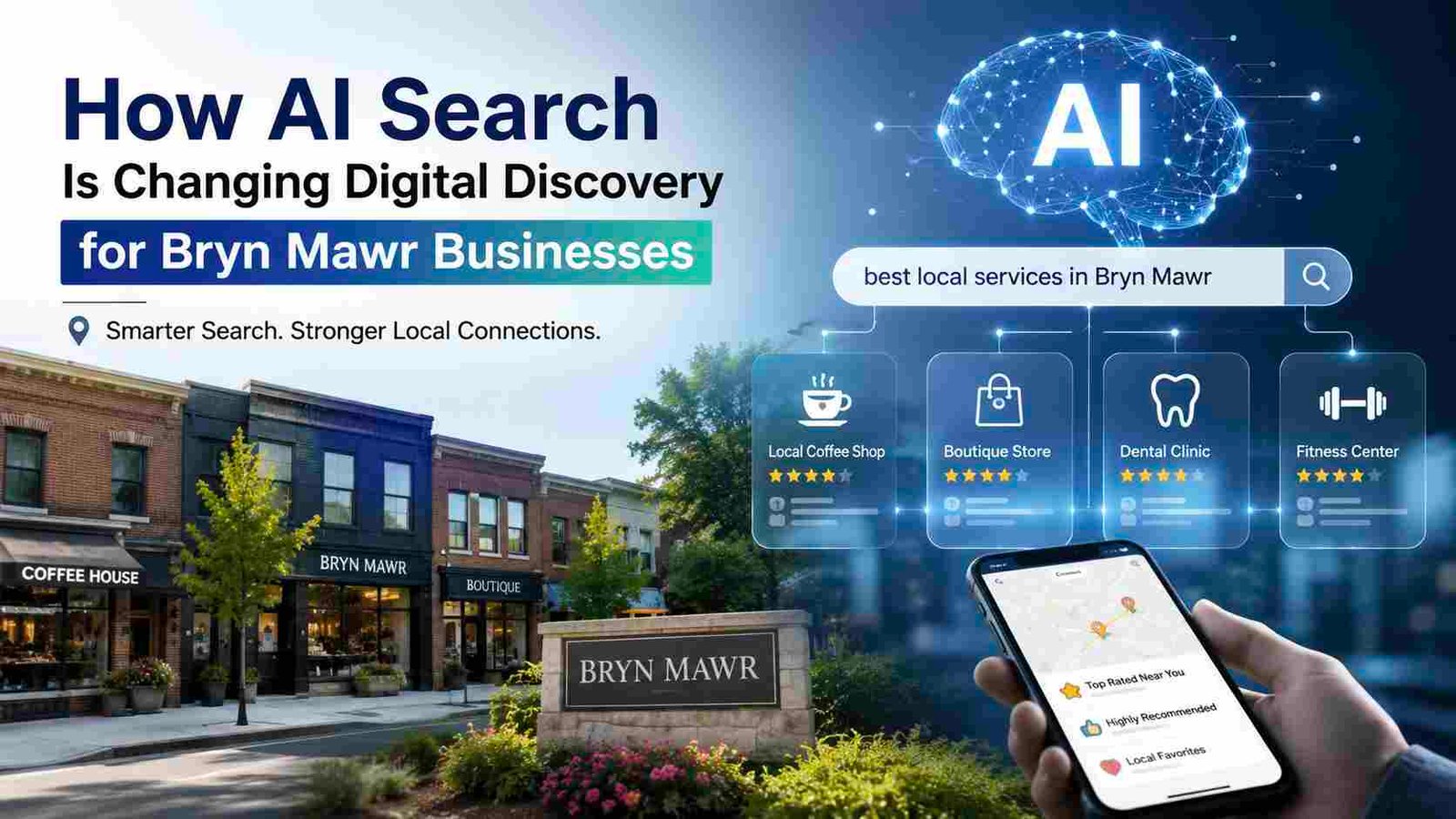

The way people find businesses online is becoming more conversational. Instead of relying only on short keyword searches, customers can now ask detailed questions and receive summarized answers through AI-powered search experiences. For businesses in Bryn Mawr, this shift creates both opportunities and challenges. Traditional search visibility still matters, but companies also need clear, useful, and trustworthy information that modern search systems can easily understand and connect with customer needs.
Customers Are Asking Search Engines More Detailed Questions
Online searches are becoming more specific. A person might once have entered a short phrase describing a service. Today, that same person may ask a complete question explaining the problem, location, requirements, or type of provider they need.
This change means businesses should understand the intent behind customer searches rather than focusing only on individual keywords.
Companies can review questions received during calls, emails, consultations, and customer interactions. These provide useful clues about what potential customers want to know before making a decision.
Creating content around those questions can help a website become more useful at different stages of the customer journey.
AI Search Favors Clear and Useful Information
AI-powered search systems aim to help users find relevant information quickly. Businesses can adapt by making important information straightforward and easy to understand.
Service pages should clearly explain what a company provides, who may need the service, and what customers should consider. FAQs can answer specific questions, while educational guides can explore topics that require more detail.
Content should also demonstrate genuine knowledge. Instead of publishing generic articles simply to target keywords, businesses can share practical explanations, original insights, and information based on real customer needs.
Clear headings and concise answers can make content easier for both visitors and different search technologies to interpret.
Traditional SEO Still Provides the Foundation
The growth of AI search does not make traditional search engine optimization irrelevant. A technically reliable website remains an important foundation for digital discovery.
Search engines need to crawl and index important pages efficiently. Logical website architecture and internal links can help them understand relationships between services and supporting content.
Mobile usability and page performance matter as well. Potential customers should be able to access information and make contact easily regardless of the device they use.
Businesses should also ensure that important service pages are not hidden deep within the website. Making valuable information easy to discover benefits search engines and users alike.
Local Signals Connect Businesses With Nearby Customers
For Bryn Mawr businesses, local relevance remains an important part of digital visibility.
A complete Google Business Profile can help customers find operating hours, contact information, services, photos, and reviews. Businesses should regularly check that this information remains accurate.
Consistency across the company website and relevant online directories can further reduce confusion. Genuine customer reviews also provide valuable context for people comparing local providers.
Website content can reinforce local relevance by clearly explaining service areas where appropriate. The goal is to provide genuinely useful location information rather than repeatedly inserting place names for optimization.
When Does a Business Need a More Advanced Search Strategy?
Managing visibility across traditional and emerging search experiences requires attention to technical performance, content, local optimization, search intent, and website structure.
As these areas become more connected, businesses may benefit from working with an experienced SEO company in Bryn Mawr to coordinate technical SEO, local visibility, content strategy, and opportunities created by changing search behavior.
Professional support should focus on sustainable improvement rather than guaranteed rankings. A strong strategy should consider how customers search, what information they need, and how effectively the website helps them move from discovery to action.
Measure Visibility Beyond Traditional Rankings
Keyword positions remain useful, but they are only one part of search performance.
Businesses should also monitor qualified organic traffic, phone calls, enquiry forms, appointment requests, and engagement with important service pages. Google Business Profile interactions can provide additional insight into local discovery.
Branded searches can also indicate whether more people are becoming familiar with a company and actively looking for it online.
As search experiences evolve, businesses may need to evaluate performance across a broader customer journey rather than relying on a single ranking report.
Prepare for the Next Stage of Digital Discovery
AI is changing how people ask questions and discover information, but the fundamentals of a strong digital presence remain important. Businesses still need technically accessible websites, useful content, accurate information, and genuine expertise.
Bryn Mawr businesses that combine these foundations with clear answers and strong local relevance can be better prepared for changing search behavior. Instead of choosing between traditional SEO and AI search, the stronger approach is to build a digital presence capable of supporting both.