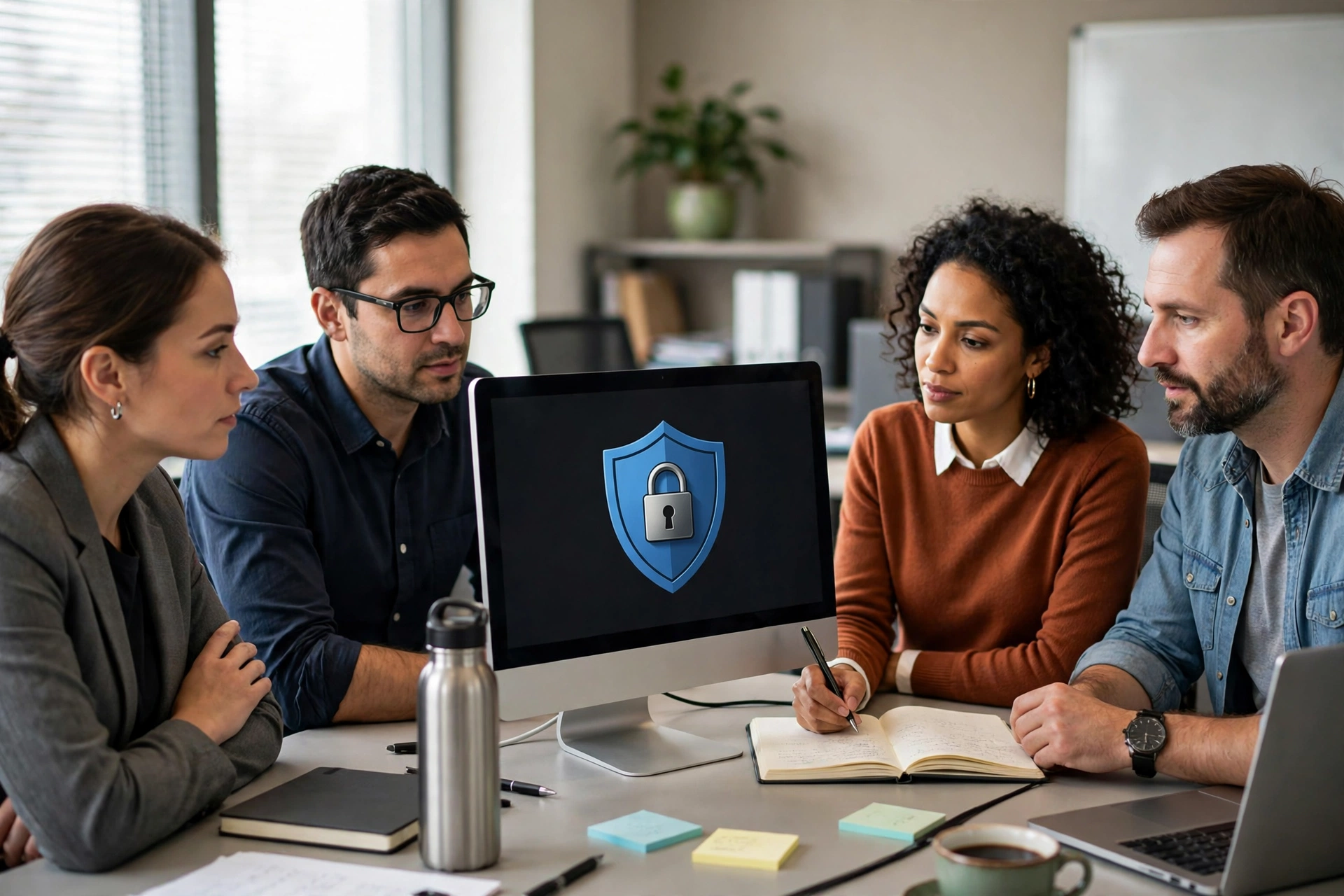

Most organizations treat cybersecurity as a technical problem. They invest in firewalls, endpoint protection, and monitoring tools, then assume the work is done. The real gap, however, is rarely in the technology stack. It lives in the behavior of the people sitting at the desks, clicking links, sharing passwords, and bypassing protocols because no one made the risk feel real to them. Building a security-first culture means changing how every person in the organization thinks about their role in protecting company data.
The foundation starts at the leadership level. When executives treat security policies as optional or delegate them entirely to an IT department without visible buy-in, employees notice. A CEO who skips mandatory security training sends a message that the rules apply to some but not all. Strong security culture requires consistent, visible commitment from the top down. This is also where the relationship between internal teams and outside IT Services partners becomes critical. When leadership is actively engaged with their service providers and communicates those priorities internally, employees understand that security is a company-wide priority, not a departmental checkbox.
Once leadership alignment is established, the next step is building awareness through education rather than fear. Security training that focuses purely on consequences tends to create anxiety without behavior change. More effective programs teach employees to recognize specific threats, like phishing attempts, social engineering calls, and unsafe credential practices, by walking through realistic scenarios. Training should happen regularly, not just during onboarding. Quarterly refreshers, simulated phishing campaigns, and open channels for reporting suspicious activity all reinforce that security awareness is an ongoing discipline rather than a one-time event.
The infrastructure supporting your people matters just as much as the training they receive. Employees cannot follow security best practices if the systems they work within are outdated, poorly configured, or difficult to navigate. Organizations that invest in Managed IT Infrastructure Services gain a structured approach to maintaining secure, well-monitored environments that support rather than hinder secure behavior. When patch management, access controls, and network segmentation are handled consistently, the technical risk surface shrinks, and the human layer of security becomes far more effective because it is not compensating for infrastructure gaps.
Accountability is the piece that many organizations underestimate. Culture is shaped by what gets measured and what gets addressed when something goes wrong. If a phishing simulation reveals that 40 percent of staff clicked a malicious link, that data should drive a specific response, not a reprimand, but a targeted intervention that closes the knowledge gap. Security metrics should be reviewed at the leadership level regularly, and improvements should be acknowledged. When employees see that their progress is tracked and that positive behavior is recognized, the culture shifts from compliance to genuine ownership.
Finally, physical and cloud infrastructure decisions carry significant cultural weight as well. Choosing a Managed Infrastructure model means your team is working within an environment that was built and maintained with security standards baked in, not bolted on afterward. This removes decision fatigue for employees who might otherwise make well-intentioned but insecure choices about data storage, remote access, or device management. When the secure option is also the easy option, adoption follows naturally.
Building a security-first culture is not a project with a completion date. It is an ongoing operational commitment that touches hiring, training, technology decisions, and leadership behavior simultaneously. Organizations that treat it as such tend to experience fewer incidents, faster response times when incidents do occur, and a workforce that genuinely understands why their habits matter. If your organization is ready to align its people, processes, and technology around a stronger security posture, reach out to Red Team IT to learn more about how they can help.