
Introduction
Homework has been a cornerstone of education for decades, but its value is increasingly being questioned by educators, parents, psychologists, and students alike. While homework is often intended to reinforce classroom learning, excessive assignments can lead to stress, burnout, and a lack of work-life balance for students. Today, debates surrounding why homework should be banned continue to grow as research highlights the negative effects of excessive academic workloads. From reduced family time to declining mental health, there are numerous reasons why homework should be banned in modern education systems.
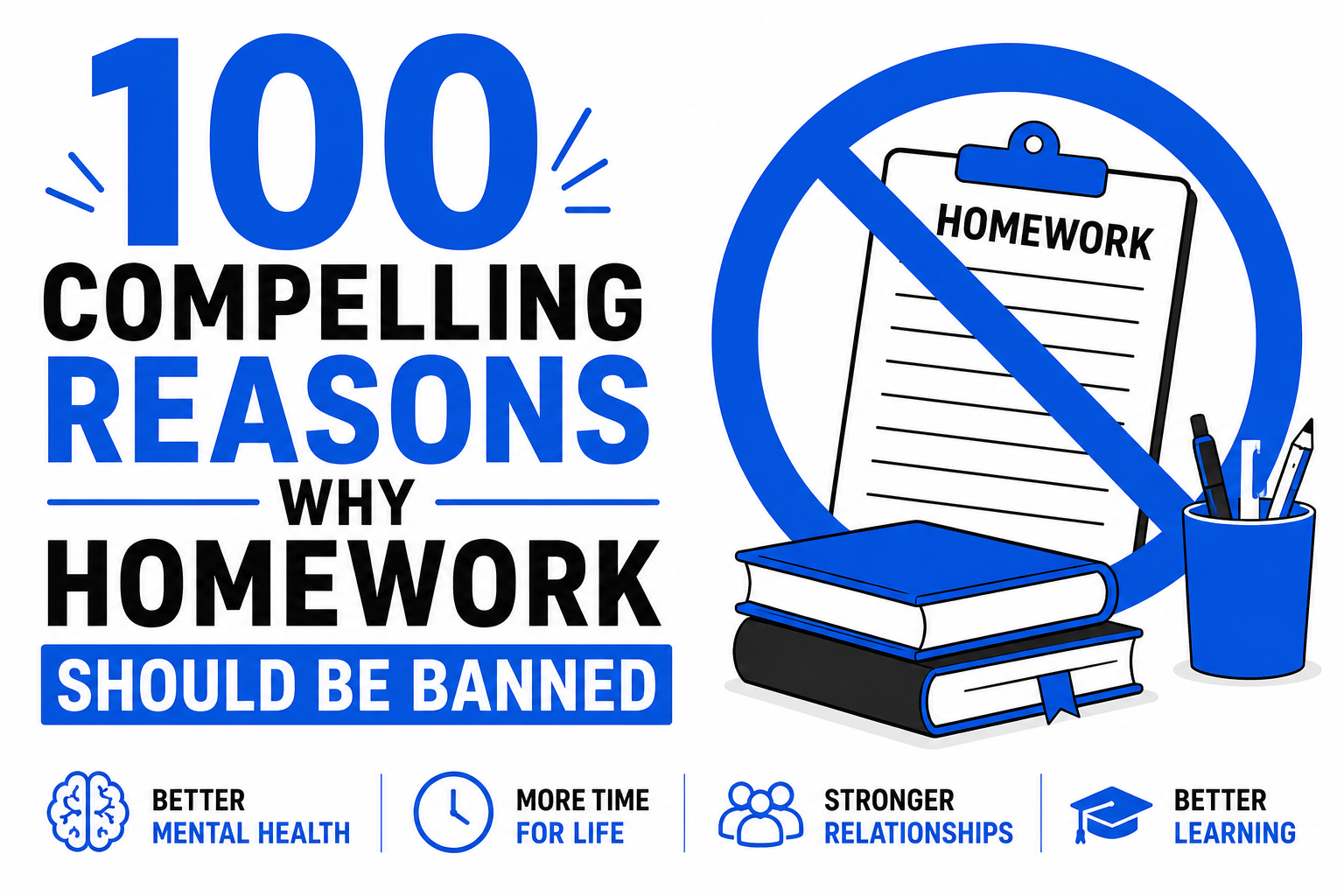
In this comprehensive guide, we explore 100 compelling reasons why homework should be banned, discuss the impact of homework on students, and answer common questions to help readers understand both sides of the debate.
Why Is Homework a Controversial Topic?
Homework was originally introduced to reinforce classroom lessons and encourage independent learning. However, education has evolved significantly. Students now face packed schedules filled with extracurricular activities, sports, part-time jobs, online learning, and personal responsibilities.
Many experts argue that homework no longer serves its intended purpose and instead contributes to unnecessary pressure.
Some of the major concerns include:
- Increased stress and anxiety
- Sleep deprivation
- Reduced creativity
- Limited family interaction
- Unequal learning opportunities
- Academic burnout
These concerns explain why discussions about reasons homework should be banned have become more common worldwide.
100 Compelling Reasons Why Homework Should Be Banned
Below are 100 reasons why homework should be banned that reflect academic, emotional, social, and health-related concerns.
Academic Reasons
- Homework does not guarantee better grades.
- Students learn more effectively during classroom instruction.
- Excessive homework encourages memorization instead of understanding.
- Many assignments become repetitive.
- Homework often lacks personalized learning.
- Students receive little immediate feedback.
- It reduces classroom engagement.
- Quality matters more than quantity.
- Homework increases academic pressure.
- Learning should focus on understanding rather than completing tasks.
Mental Health Reasons
- Homework increases stress levels.
- It contributes to anxiety.
- Students experience emotional exhaustion.
- Homework can lower self-confidence.
- Constant deadlines create pressure.
- Burnout becomes more common.
- Students feel overwhelmed.
- Fear of incomplete assignments affects mental health.
- It reduces motivation.
- Mental wellness should come before extra assignments.
Physical Health Reasons
- Homework reduces sleep.
- Poor sleep affects concentration.
- Students spend excessive hours sitting.
- Lack of exercise affects health.
- Eye strain increases due to screen-based assignments.
- Poor posture develops over time.
- Stress can weaken immunity.
- Students experience fatigue.
- Less outdoor activity impacts physical fitness.
- Healthy routines become difficult to maintain.
Family and Social Reasons
- Homework reduces family bonding.
- Parents often become unpaid tutors.
- Family dinners are interrupted.
- Less time is available for siblings.
- Students miss social activities.
- Homework creates family conflicts.
- Personal relationships suffer.
- Students lose opportunities to build communication skills.
- Family vacations become stressful.
- Home should be a place for relaxation.
Personal Development Reasons
- Homework limits creativity.
- Students have less time for hobbies.
- Reading for pleasure decreases.
- Artistic interests are ignored.
- Music practice becomes difficult.
- Volunteer activities are reduced.
- Entrepreneurship opportunities decrease.
- Students cannot explore personal passions.
- Time management becomes harder.
- Independent thinking may decline.
Educational Equality Reasons
- Not every student has internet access.
- Some lack a quiet study environment.
- Parents have different educational backgrounds.
- Economic inequality affects homework completion.
- Shared devices limit learning.
- Homework widens achievement gaps.
- Some students must work after school.
- Learning resources vary significantly.
- Students with disabilities face additional challenges.
- Education should provide equal opportunities.
Extracurricular Benefits
- Sports improve overall development.
- Clubs teach leadership.
- Community activities build confidence.
- Homework limits extracurricular participation.
- Students miss competitions.
- Practical learning often provides better experiences.
- Teamwork develops outside classrooms.
- Real-world skills require free time.
- Creative activities encourage innovation.
- Balanced lifestyles improve learning.
Technology Challenges
- Screen time increases.
- Online distractions reduce productivity.
- Internet problems delay assignments.
- Digital fatigue affects concentration.
- Technical issues create unnecessary stress.
- AI misuse can reduce genuine learning.
- Cybersecurity concerns exist.
- Students become overly dependent on devices.
- Digital overload affects attention spans.
- Technology should support—not dominate—education.
Motivation and Learning
- Homework often feels like punishment.
- Students lose interest in subjects.
- Curiosity decreases.
- Intrinsic motivation declines.
- Learning becomes task-oriented.
- Students rush to finish work.
- Grades become the only focus.
- Critical thinking is reduced.
- Classroom participation may decrease.
- Positive learning experiences become less common.
Long-Term Reasons
- Childhood should include free play.
- Rest improves memory.
- Happy students learn better.
- Balanced lives support academic success.
- Schools should encourage lifelong learning.
- Free time promotes innovation.
- Emotional health improves academic outcomes.
- Students deserve time for personal growth.
- Education should inspire rather than overwhelm.
- Learning should continue through curiosity—not compulsory homework.
10 Reasons Why Students Should Not Have Homework
Many people specifically search for 10 reasons why students should not have homework. Here are the most significant ones:
- It increases stress.
- Students need adequate sleep.
- Family time is important.
- Free time encourages creativity.
- Sports and hobbies support development.
- Homework creates unequal opportunities.
- Classroom learning should be sufficient.
- Mental health deserves priority.
- Students need time to relax.
- Balanced education produces better outcomes.
20 Reasons Why Homework Should Be Banned
If you’re looking for 20 reasons why homework should be banned, here is a concise summary:
- Causes stress
- Reduces sleep
- Limits exercise
- Increases anxiety
- Reduces creativity
- Less family interaction
- Unequal access to resources
- Screen fatigue
- Academic burnout
- Poor work-life balance
- Limited extracurricular participation
- Repetitive assignments
- Decreased motivation
- Excessive pressure
- Internet dependency
- Less independent exploration
- Reduced social development
- Emotional exhaustion
- Homework overload
- Better alternatives exist within classrooms
100 Reasons Why Homework Is Bad
When discussing 100 reasons why homework is bad, the conversation extends beyond academic performance. Homework can affect emotional well-being, physical health, relationships, and motivation. While moderate practice may benefit some learners, excessive homework often creates more challenges than educational gains.
Educational experts increasingly recommend meaningful classroom learning, project-based education, collaborative activities, and personalized instruction instead of assigning large amounts of homework every day.
Does Research Support Limiting Homework?
Several educational studies suggest that homework has limited academic benefits for elementary students and diminishing returns when assigned in excessive amounts. Older students may benefit from focused practice, but quality is generally considered more valuable than quantity.
Many schools worldwide are experimenting with homework-free policies or limiting daily homework to encourage healthier learning environments.
Smarter Alternatives to Traditional Homework
Instead of lengthy assignments, schools can encourage:
- Classroom discussions
- Project-based learning
- Reading for enjoyment
- Practical experiments
- Educational games
- Collaborative group work
- Skill-based activities
- Real-world problem solving
- Reflective journals
- Creative presentations
These methods often improve engagement while reducing unnecessary stress.
When Students Need Academic Support
Some subjects, particularly technical courses, can become challenging regardless of homework policies. When students require additional guidance in programming, engineering, mathematics, or computational modeling, seeking professional academic support can make learning more effective.
For example, if you’re struggling with numerical computing, simulations, or engineering projects, StudyUnicorn’s MATLAB Assignment Help service provides expert assistance to help students better understand complex concepts while meeting academic expectations.
WSG Meaning: Understanding the Popular Internet Slang
If you’ve come across the abbreviation WSG Meaning in text messages or on social media, you’re not alone. WSG stands for “What’s Good?”, a casual greeting commonly used on platforms like Snapchat, Instagram, TikTok, and WhatsApp. It’s another way of asking, “How are you?” or “What’s going on?” Understanding modern internet slang like WSG helps you communicate more confidently in online conversations. If you’d like to explore more texting abbreviations, social media slang, and their meanings, check out our detailed guide on WSG Meaning for examples and everyday usage.
Conclusion
The discussion surrounding why homework should be banned continues to evolve as educators seek healthier and more effective ways to support student success. These 100 reasons why homework should be banned demonstrate that excessive homework can affect much more than academic performance—it influences mental health, physical well-being, family relationships, creativity, and overall quality of life.
Instead of focusing solely on completing assignments, education should encourage curiosity, critical thinking, collaboration, and lifelong learning. By creating a balanced approach, schools can help students achieve academic success while also supporting their personal growth and well-being.
Whether you’re searching for 100 reasons why homework should be banned, 100 reasons why homework is bad, 10 reasons why students should not have homework, or 20 reasons why homework should be banned, the key takeaway is clear: meaningful learning is far more valuable than excessive workloads, and educational systems should strive to balance achievement with student wellness.
Frequently Asked Questions
Why should homework be banned?
Many believe homework should be banned because excessive assignments contribute to stress, anxiety, reduced sleep, and limited personal development. A balanced education should prioritize meaningful learning over long hours of homework.
What are the main reasons why homework is bad?
Some of the biggest reasons why homework is bad include increased stress, lack of free time, reduced physical activity, family conflicts, unequal learning opportunities, and decreased motivation.
Is homework always harmful?
Not necessarily. Short, purposeful assignments can reinforce learning. However, excessive or repetitive homework may create more disadvantages than benefits.
Do students perform better without homework?
Some schools that have reduced homework report improved student well-being, higher classroom engagement, and greater enthusiasm for learning. Academic outcomes often depend on the quality of instruction rather than the quantity of homework.
Should all homework be eliminated?
Rather than eliminating every assignment, many education experts recommend reducing unnecessary homework and replacing it with meaningful, practical learning experiences