
Key Takeaways
- Document every repair visit from the first sign of a recurring problem.
- Make sure each repair order states the symptom in clear, specific terms.
- Treat brake, steering, overheating, power-loss, and fire-risk concerns as urgent safety issues.
- Check your truck’s VIN for open safety recalls and keep warranty records together.
- Repeated repair attempts and days out of service can matter when reviewing warranty options and state consumer protections.
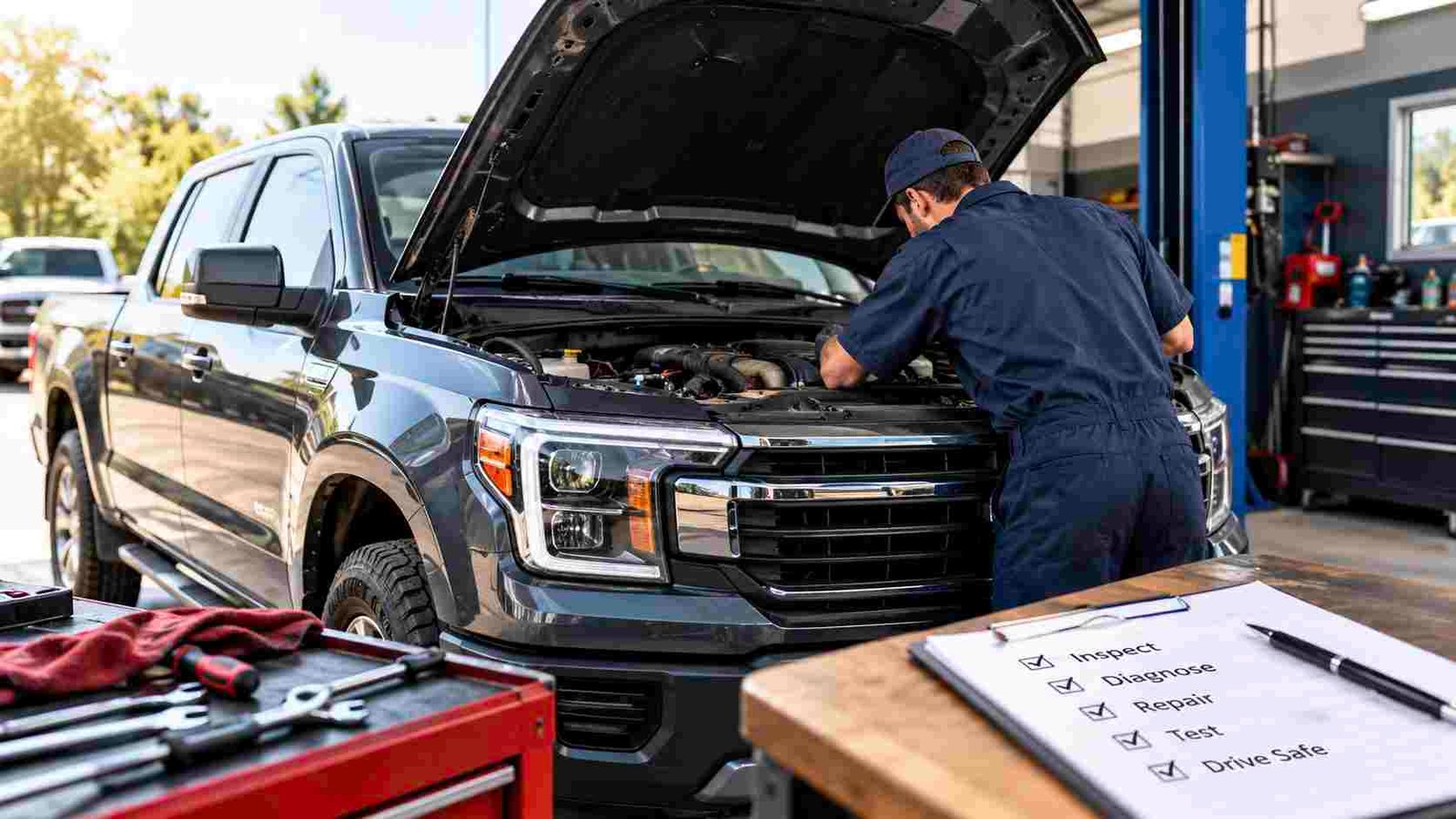
A new pickup truck is expected to be dependable, especially when it supports work, towing, family travel, or daily transportation. An occasional adjustment or isolated repair can happen with any complex vehicle. But when the same warning light, mechanical symptom, electrical failure, or safety concern keeps returning, it is time to approach the issue with a careful plan. Owners researching owner-reported issues with the Silverado may recognize how quickly a recurring concern can turn into missed work, inconvenient dealer visits, and uncertainty about whether the problem was actually fixed.
The most useful response is not to guess at the cause or rely on memory. Create a record, communicate clearly with the dealership, and take safety symptoms seriously. A well-organized repair history helps the service department identify patterns, helps you track warranty coverage, and provides reliable information if you later need to discuss the truck with the manufacturer or a consumer-protection professional.
Why Repeated Repairs Deserve Attention
A single visit for a loose trim piece or a software update is different from three visits for the same engine warning, harsh shift, or loss of electrical function. Repeated symptoms may mean the underlying cause was not found, the issue is intermittent, or more diagnoses are needed. The practical impact also adds up. Each visit may require time away from work, alternative transportation, towing, and changes to family or work schedules.
For example, a truck that returns three times for the same check-engine light should not be treated as three unrelated events if the symptom or diagnostic code is similar. Keep the documents together so the dealer can review the full history, not just the latest appointment.
Start With a Clear Problem Record
Before the next appointment, make a simple timeline in a notebook, phone file, or spreadsheet. Record:
- The date, mileage, and approximate time the issue occurred.
- A plain-language description of what happened.
- Road, weather, speed, load, towing, and driving conditions.
- Dashboard warnings, sounds, smells, vibration, or visible leaks.
- Photos, videos, towing records, emails, invoices, and rental expenses.
Video can be particularly useful for intermittent noise, a flickering screen, a warning message, or shifting behavior that disappears before the truck reaches the service bay. Do not attempt to record while driving. Have a passenger capture it safely, or record the condition while the vehicle is parked.

Use Precise Language at the Dealership
“The truck feels strange” may not provide a technician with enough information to reproduce the problem. Instead, describe the event as specifically as possible, such as “The steering becomes stiff during low-speed turns after the truck has been driven for 20 minutes,” or “The transmission hesitates before engaging when leaving a stop.” Ask the service writer to place your exact complaint on the repair order, then review the wording before you sign.
Keep a copy of every repair order, including those that say “could not duplicate” or “no problem found.” Also, ask what was tested, whether diagnostic codes were stored, what parts or software were involved, whether the repair was verified under similar conditions, and what to do if the issue returns. These questions help distinguish a confirmed repair from a cleared warning light.
Check for Recalls and Safety Campaigns
Use the VIN recall lookup tool to check for any unrepaired safety recalls associated with your specific truck. A VIN search can show open recalls, while a year, make, and model search can provide broader information about recalls, complaints, investigations, and manufacturer communications. A completed recall may not appear as open, and recently announced recalls may not immediately include every affected VIN, so it is sensible to check again after receiving a notice or seeing a new safety warning.
A safety recall is not the same as a technical service bulletin. A recall addresses a safety-related defect or compliance issue and includes a manufacturer’s remedy. A technical service bulletin is guidance to dealers about diagnosing or repairing a known condition. It can still be useful during a service visit, but it does not automatically mean every vehicle receives a free repair.
Know Which Problems Need Immediate Action
Stop Driving and Seek Help When
- Brakes feel weak, spongy, unpredictable, or require unusual pedal effort.
- Steering locks suddenly, pulls hard, or becomes difficult to control.
- The truck loses power while moving in traffic.
- The engine overheats, smoke appears, or there are signs of a possible fire risk.
- A dashboard message specifically instructs the driver to stop the vehicle.
Schedule Service Soon For
- Repeated warning lights or recurring error messages.
- Water entering the cabin, bed, or electrical areas.
- Persistent vibration, shaking, harsh shifting, or hesitation.
- Electrical features that repeatedly fail or reset.
Track Repair Attempts and Time Out of Service
Keep a running total of repair visits and the days your truck is unavailable, including delays for parts, inspections, software updates, and repeat testing. State laws governing problem vehicles vary, and eligibility can depend on factors such as vehicle type, mileage, timing, repair history, and the nature of the defect. Review your state’s official consumer resources or seek qualified advice based on your specific facts, rather than assuming a single rule applies everywhere.
Read the written warranty as well. Warranty coverage may have time, mileage, deductible, maintenance, and repair-location terms. The Federal Trade Commission notes that maintenance and repair records can be important when making a warranty claim, so store routine maintenance receipts alongside dealer repair orders.
When “Could Not Duplicate” Is the Answer
An intermittent issue can be difficult to confirm, but the complaint should still appear on the repair order. Provide a short video, the exact warning text, the conditions under which it happened, and any diagnostic information you have. Ask whether the technician drove the truck under comparable conditions and whether relevant data was saved. If the problem continues without a clear explanation, another authorized dealer may offer a fresh diagnostic approach. An independent technician can also provide a separate mechanical assessment, but confirm warranty implications before authorizing outside repairs.
A Simple Repair-Record Checklist
- Vehicle year, make, model, VIN, purchase or lease date, and current mileage.
- Dates of visits, symptoms reported, findings, parts replaced, and diagnostic results.
- Total days out of service, towing charges, rental costs, and transportation expenses.
- Names of service staff, emails, texts, and copies of every repair order.
Conclusion
A newer pickup truck should not become a continuing repair project. Clear records, accurate descriptions, recall checks, and prompt action on safety concerns put the owner in a stronger position to pursue an effective repair. Do not wait until the warranty is nearly over, discard service paperwork, or continue driving when essential safety systems behave unpredictably. Addressing a repeated problem early can prevent a manageable issue from becoming a long-term burden.