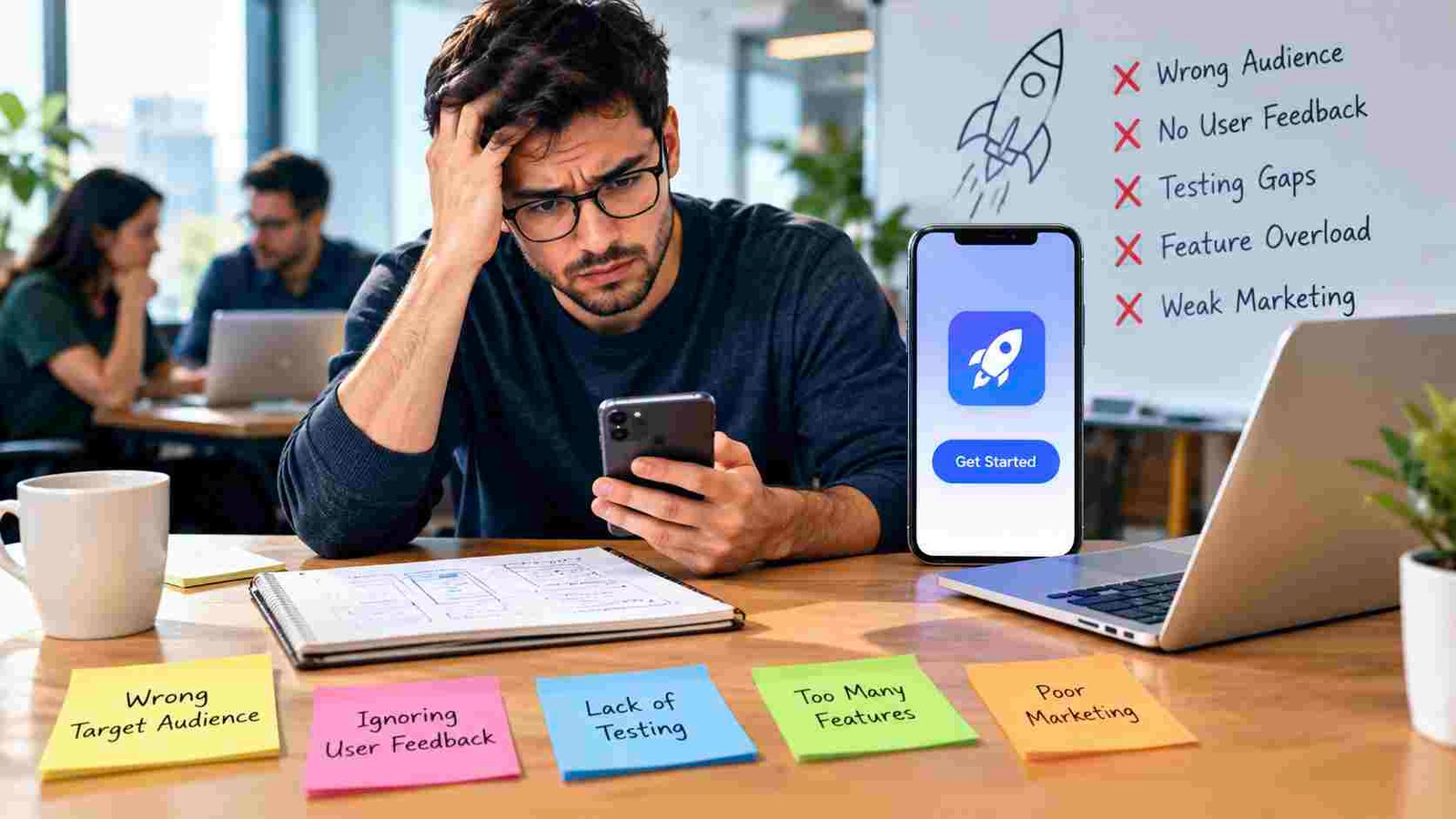

Most founders launching their first mobile app make the same handful of mistakes, and almost none of them are technical. The code usually works. The problems show up in decisions made weeks before a single line of code gets written: picking the wrong platform first, underestimating what “done” actually means, and treating launch day as the finish line when it’s really the starting line.
Here’s what actually goes wrong, based on patterns that repeat across first-time mobile launches regardless of industry.
Mistake One: Building for Every Platform Before Validating the Product
The instinct to cover both iOS and Android from day one feels responsible. In practice, it splits a small engineering team’s attention across two codebases before anyone knows whether the product itself works. A five-person team building two native apps simultaneously spends real hours every week just keeping feature parity between platforms, testing both, and fixing platform-specific bugs twice, time that isn’t going toward finding out if users actually want the product.
Startups that launch focused on one platform first, with a team that genuinely specializes in it, typically reach real user feedback weeks faster. Working with a dedicated iOS app development services partner for an iPhone-first build, or a dedicated Android app development services team for an Android-first build, gets a focused team shipping a genuinely polished MVP, the kind two split teams rarely manage together.
Mistake Two: Treating “Feature Complete” as “Launch Ready”
A working feature list and a launch-ready app are two different things, and founders new to mobile development consistently confuse them. An app that technically does everything on the spec sheet but hasn’t been tested across enough real devices, hasn’t handled edge cases like poor connectivity or interrupted payments, and hasn’t been through a genuine QA pass isn’t ready, even though every feature “works” in a demo.
This gap shows up hardest at App Store and Google Play submission. Apple’s review process rejects a meaningful share of first-time submissions for issues that have nothing to do with core functionality: incomplete metadata, missing privacy disclosures, or UI that doesn’t follow platform guidelines closely enough. Google Play’s review tends to move faster but carries its own policy requirements around data handling and permissions that catch unprepared teams off guard just as often.
Mistake Three: Underestimating the Post-Launch Workload
Launch day feels like the finish line when a founder has spent months building toward it. It’s actually closer to the starting line. The first two weeks after launch typically surface crash reports from device and OS combinations nobody tested, user feedback that reveals confusing flows nobody caught internally, and performance issues that only show up under real usage patterns a small internal test group never produces.
Teams that budget zero engineering time for this period get blindsided. The ones that treat the first month post-launch as an active development phase, with a team on standby to ship fixes fast, protect their App Store rating during the exact window when early reviews shape whether new users download the app at all.
Mistake Four: Picking a Platform Based on the Founder’s Own Phone
This one sounds almost too obvious to mention, and it happens constantly anyway. A founder who personally carries an iPhone defaults to building iOS first, without checking whether their actual target customer carries one too. The data matters more than personal preference: where early waitlist signups come from, what device type shows up in any analytics already available, and what competitors in the same space chose and why.
A consumer app targeting price-sensitive markets in Southeast Asia or Latin America, where Android dominates, built iOS-first purely because the founder prefers an iPhone is solving the wrong problem for the wrong user. This mistake costs real months of runway chasing a platform where the actual target customer barely shows up.
Mistake Five: Not Budgeting for What Comes After the MVP
An MVP that validates the core idea is the right first step for almost every startup. The mistake is treating that MVP budget as the full cost of the product. Real user feedback after launch almost always surfaces features that matter more than anything on the original roadmap, and a team that’s spent its entire budget on the initial build has nothing left to act on what they just learned.
Founders who set aside a genuine second phase of budget, planned from the start, can actually respond to what real users tell them. Skip that planning, and a validated insight sits unbuilt for six months while the team scrambles to raise another round just to act on it.
What Getting This Right Actually Looks Like
A first-time founder who picks one platform based on real data, works with a team that specializes in that platform, budgets honestly for the post-launch stabilization period, and sets aside real resources for a second phase based on actual user feedback avoids nearly every mistake on this list. None of these fixes are expensive relative to the cost of getting them wrong. They just require deciding on them before the build starts, well before the gap gets discovered after launch when it’s already costing real users and real reviews.
What This Looks Like in Practice
A founder building a scheduling app for independent fitness instructors launched with a feature list that looked complete on paper: booking, payments, calendar sync, and client messaging. What the pre-launch testing missed was how the app behaved when an instructor’s phone lost signal mid-booking, a routine occurrence for anyone teaching in a basement gym or a park. The first two weeks of reviews were dominated by that single edge case, and the team had budgeted zero time to fix it quickly.
A second founder building a similar product budgeted a genuine two-week stabilization sprint immediately after launch, staffed and ready before the app even went live. The same category of bug surfaced in their app too. The difference was a fix shipped within 48 hours, with no backlog sitting unresolved for a month while the team scrambled to find engineering time they hadn’t planned for. Their App Store rating never dipped below 4.2. The first founder’s sat at 3.1 for six weeks before recovering.
The Takeaway
The technical side of a first mobile app launch is rarely where founders go wrong. The decisions made before development starts, platform choice, realistic scope, and a genuine plan for what happens after launch day, determine whether that first app actually finds its users or quietly disappears a few weeks after shipping. Getting those decisions right the first time is far cheaper than fixing them after the fact.